Cache Coherency Defined
If the CPU was the only entity modifying memory, the cache would effectively be transparent to system operation and we would never have cache coherency issues. In a PIC32 device, DMA and DMA-enabled peripherals also modify memory. Therefore, any data that can be modified by both the CPU and DMA must be synchronized.
PIC32MZ Cache Coherency Issue:
Maintain consistent data between local memory for the CPU (cache) and local memory for DMA (main data memory).
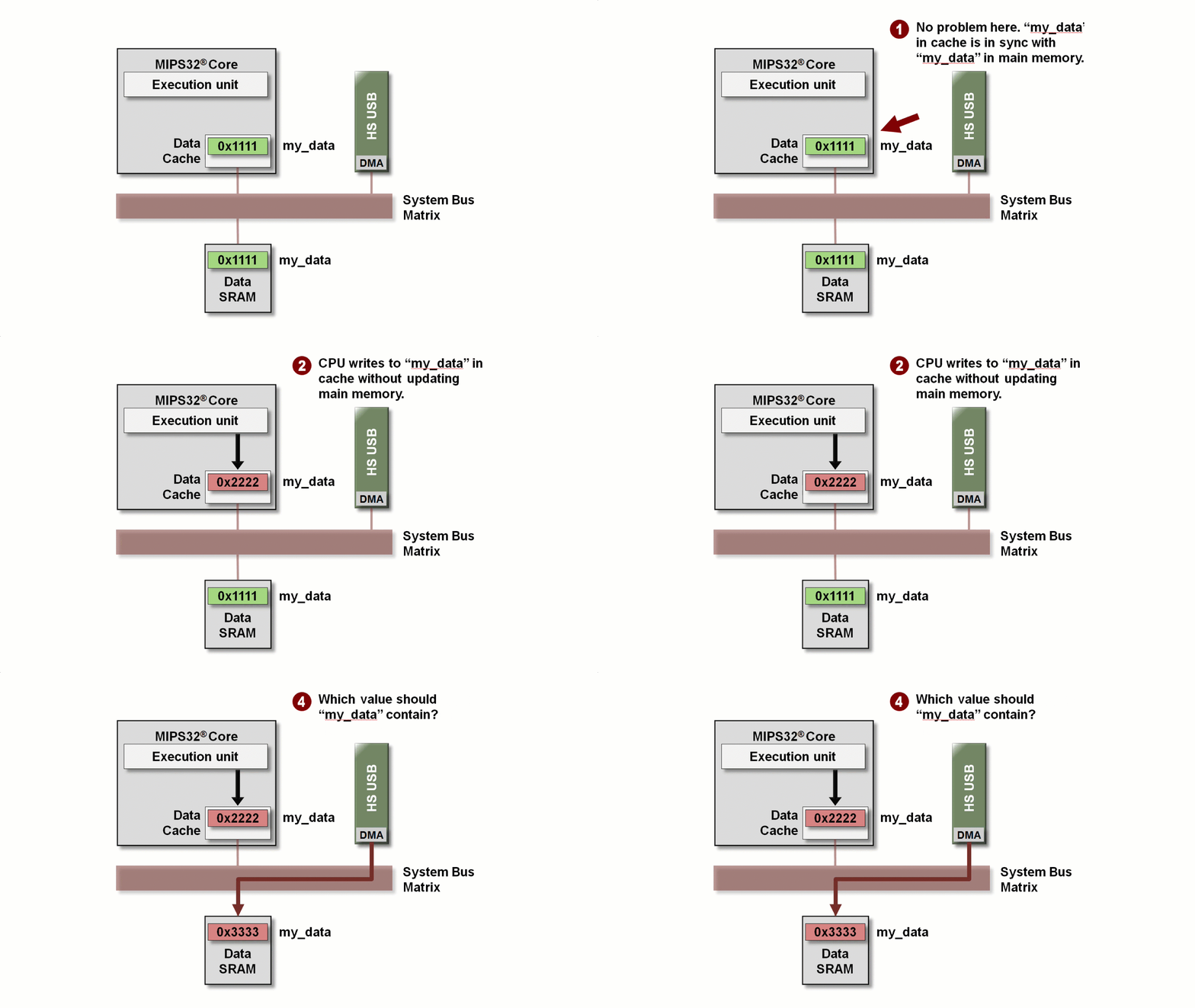
If the CPU or DMA writes to memory, there is a chance the cache may no longer represent the contents of main memory. In this case, the cache will have dirty or stale data respectively. Before we show you how to manage this situation, let’s describe it in more detail.
Stale Cache
When DMA writes to a location that is already loaded into the cache, the cache no longer represents the contents of main data memory. When this occurs, the data in the cache is said to be stale. In this example, the CPU is not aware that “my_data” stored in the cache is different from “my_data” in main memory.

This creates two problems.
- The CPU will work with stale data instead of the updated data.
- If the CPU modifies “my_data” in the cache, it may write-back “my_data” to main memory, thus overwriting the data previously written by DMA.
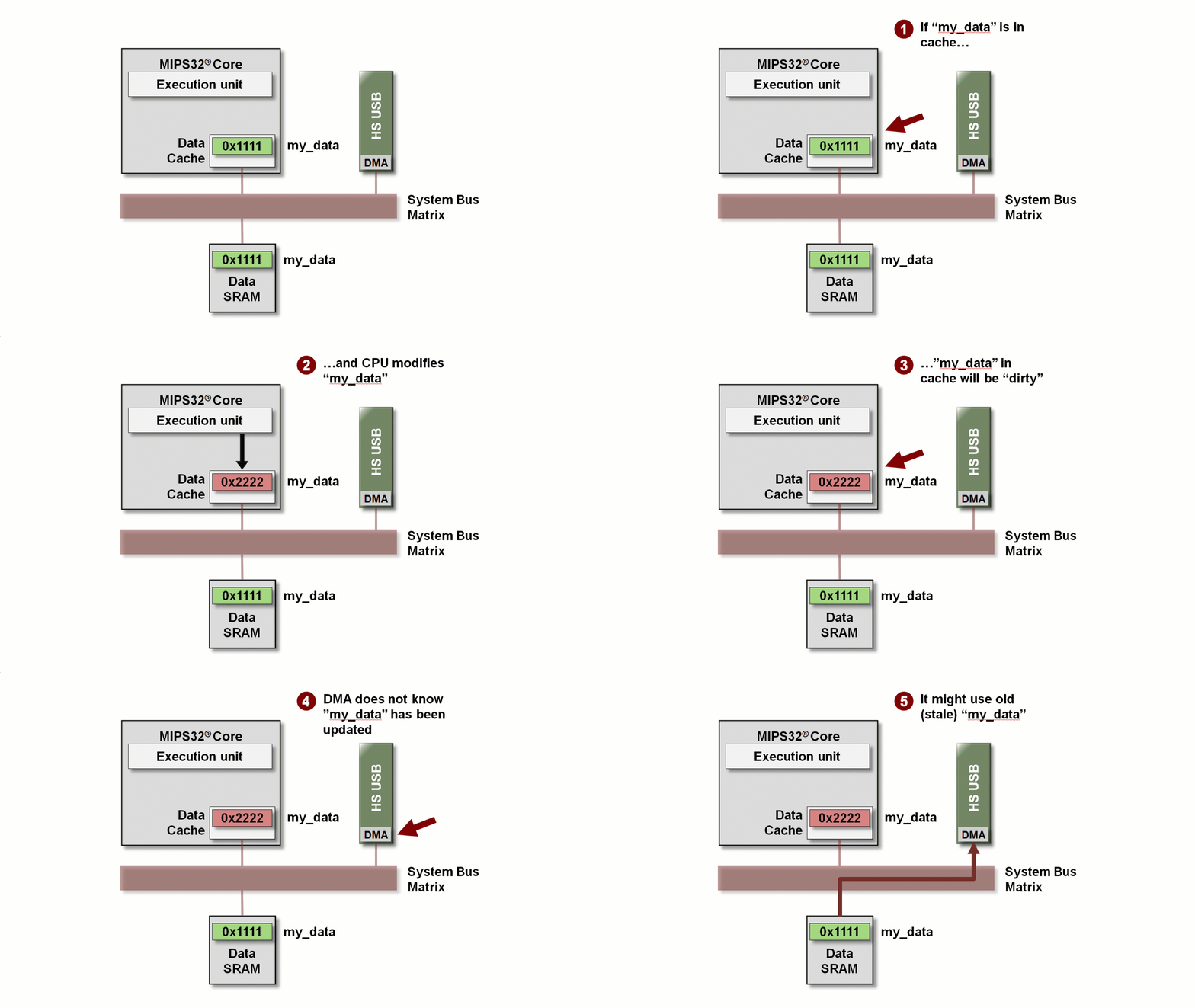
Dirty Cache
In this example, the CPU has brought “my_data” into the cache and modified it without writing it back to main memory. This creates a dirty cache. If the DMA reads “my_data” it will be reading old (stale) data.