
Key Concepts
This section identifies the use of positive feedback in op-amp circuits. Analyze the operation of several basic comparator circuits and the operation of several types of summing amplifiers.
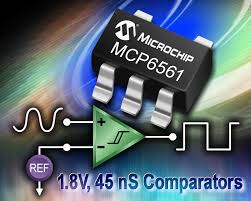
- Hysteresis
- Schmitt trigger
- Comparator
- Summing amplifier
- Digital-to-analog converter
Important Pointers
- Comparators operate with open-loop gain.
- The output is limited by the power supply voltage applied to the circuit.
- Noise levels are usually the same at both the inverting and non-inverting inputs.
- An op-amp comparator that uses hysteresis is called a Schmitt trigger.
- Noise at the input of the comparator can cause inadvertent output transitions.
- Hysteresis (positive feedback) is used to minimize the impact of noise on the comparator output.
- A summing amplifier can be scaled to apply unity gain to all inputs.
- A summing amplifier can be scaled to apply greater than unity gain to all inputs.
- A summing amplifier can be scaled to apply differing gains to the inputs (scaling adder).
- The use of negative feedback has a major impact on the input and output impedance that can be far different than the design parameters.